
Veer Cruiser vs Veer Cruiser XL — Which Is Better?
Side by side |
Veer
Veer Cruiser
—
UNSCORED
|
Veer
Veer Cruiser XL
—
UNSCORED
|
|---|---|---|
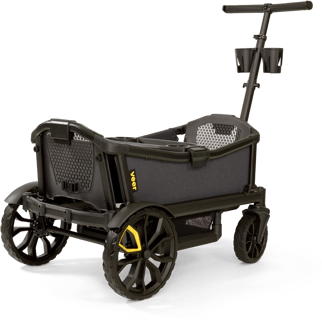 | 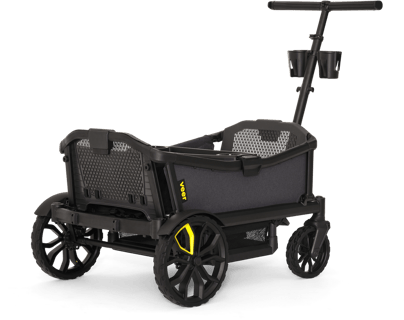 | |
| General | ||
Read the General ComparisonOverviewThe Veer Cruiser and Cruiser XL are Veer's all-terrain stroller wagons at two passenger capacities. The standard Cruiser seats two children in tandem with 3-point harnesses and folds flat one-handed. The Cruiser XL carries four children instead of two while keeping the same harness type, tire setup and flat one-hand fold, and both models rate each passenger place to 55 lbs. The practical choice is mostly capacity versus weight. Both accept one infant car seat with an optional adapter, both use vented built-in seats with no included canopy, and both roll on polyurethane tires with front suspension and removable wheels. The XL is the heavier wagon with wheels fitted and has an expandable foot well, while the standard Cruiser is the lighter option for one or two riders. | ||
| Stroller Status | In Production | In Production |
| Country Origin | Unknown | Unknown |
| Stroller Type |  Wagon | Wagon |
| Frame | ||
Read the Frame ComparisonSize & HandlingThe Cruiser weighs 32.6 lbs with wheels fitted and 24.6 lbs with the pop-off wheels removed. The Cruiser XL weighs 36.7 lbs with wheels and 28.7 lbs without them, so wheel removal is the way to lighten either wagon for lifting. Both have telescopic handlebars that adjust to the pushing parent's height. Neither wagon includes a shopping basket in its standard package; the sized rear basket is a snap-on accessory sold separately, and the base wagons have interior pockets. Unfolded, the standard Cruiser measures 37 inches long, 20 inches wide and 23 inches high. | ||
| Stroller Weight | 14.79 kg2.9537 | 16.65 kg2.9537 |
| Frame Material | Aluminum | Aluminum |
| Unfolded Dimensions | 37" L x 20" W x 23" H | Unknown |
| Rocking Frame | Unknown | Unknown |
| Maximum Weight Capacity | 24.95 kg9.9899.79 | 24.95 kg9.9899.79 |
| Handle Height Adjustment | Telescopic | Telescopic |
| Handle Material | Unknown | Unknown |
| Shopping Basket | No | No |
| Seat | ||
Read the Seat ComparisonSeating & CapacityThis is the core difference between the two. The Cruiser has two built-in seats in a tandem front-and-back layout, while the Cruiser XL has four individual built-in seats. Both wagons are rated to 55 lbs per passenger place, so the seat count, not the per-seat limit, is what separates them. The XL's built-in seats are recommended from 6 months, when a child can sit unaided in the harness, with a 55 lb and 45 inch per-child limit. Newborn use on either wagon works only through an optional infant car seat and separately sold adapter, not the main seats. The standard Cruiser also offers a separately sold Nap System accessory that provides a certified bassinet mode. Comfort & CareBoth wagons use vented built-in seats, and neither includes a canopy; sun shade on each is a separately sold accessory rather than standard equipment. The XL has an expandable, collapsible foot well. Seat surfaces on both are wipe-clean or spot-clean only. On the XL, that method applies to the main built-in seats; soft-sided panels and harnesses have separate hand-wash instructions, and the bare chassis can be hose-rinsed after removing accessories and wheels. Harness & RestraintsBoth wagons come with 3-point harnesses at every built-in seat: two on the standard Cruiser and four on the XL. On each model, a 5-point harness comes only through the separately sold Comfort Seat accessory, so a family wanting 5-point restraints needs to buy that upgrade for either wagon. | ||
| Seats Number | 2 | 4 |
| Double Type |  Tandem | Unknown |
| Recommended Age | 6 months + | 6 months + |
| Converts Double | No | Unknown |
| Reversible Unit | Unknown | No |
| Bassinet | Yes | No |
| Safety Harness | 3-point | 3-point |
| Safety Harness Padding | Unknown | Unknown |
| Height Adjustable Harness | Unknown | Unknown |
| Ventilation Integrated | Yes | Yes |
| Canopy | No | No |
| Waterproof Canopy | Unknown | Unknown |
| Peek A Boo Window | Unknown | Unknown |
| Bumper Bar | No | No |
| Reclining Backrest | No | No |
| Full Reclining Backrest | Unknown | Unknown |
| Backrest Type | – | – |
| Footrest | Yes | Yes |
| Legrest Position | Unknown | Unknown |
| Fabrics Removable | No | No |
| Fabrics Cleaning | Wipe-clean / Spot-clean only | Wipe-clean / Spot-clean only |
| Folding and Traveling | ||
Read the Folding and Traveling ComparisonFolding & TravelBoth wagons use the same flat, compact folding system: the built-in seat backs fold down, followed by the side walls and handle, with the seats staying on the chassis. Optional accessories need to be removed before folding. Both fold flat with one hand; the standard Cruiser is self-standing when folded, and wheel removal gives the XL a further compact setup. | ||
| Folding System |  Compact flat fold | Compact flat fold |
| Folds Forward Facing Seat | Yes | Yes |
| Auto Locking Fold | Unknown | Unknown |
| Carry Strap | Yes | Yes |
| One Hand Fold | Yes | Yes |
| Airplane Carry On | Unknown | Unknown |
| Car-Seat | ||
Read the Car-Seat ComparisonInfant Car SeatsBoth wagons accept one infant car seat using a brand-specific adapter sold separately, and neither includes a car seat in the base package. Each is limited to a single carrier at a time, so the XL's extra seats do not translate into a two-carrier setup. Adapter coverage differs in the details. Both support Maxi-Cosi carriers such as the Mico Max 30, Mico 30, Nxt and Mico AP, plus Cybex Aton Q and Aton M, while Cybex Cloud Q is excluded on each. For Britax, the Cruiser's guide covers the pre-2024 lineup including B-Safe 35 variants, Endeavour and Chaperone. The XL's compatibility guide also lists the Cypress and Willow family, with Willow variants requiring the seat back folded down. Check the maker's compatibility list before choosing an adapter. | ||
| Car Seat Compatible | Yes | Yes |
| Car Seat Sold Separately | Yes | Yes |
| Maxi Cybex Adaptors | Yes | Yes |
| Britax Car Seat Adapters | Yes | Yes |
| Wheels | ||
Read the Wheels ComparisonWheels & TerrainBoth wagons are all-terrain stroller wagons with polyurethane foam tires at all four positions and suspension on the front swivel wheels. Wheels pop off both models, lowering the weight you handle. For parking, the standard Cruiser has a one-touch foot brake: step down to lock and tap a gray button to unlock. The XL locks its wheels through its own one-touch foot brake. The XL's wheels measure 7.5 inches front and 12 inches rear. | ||
| Number Wheels | 4 | 4 |
| Front Wheels Type | Polyurethane tires | Polyurethane tires |
| Rear Wheels Type | Polyurethane tires | Polyurethane tires |
| Front Diameter | 7.5" | 7.5 in |
| Rear Diameter | 12" | 12 in |
| All Terrain Stroller | Yes | Yes |
| Brake System | Foot brake | Foot brake |
| Lockable Wheels | Yes | Yes |
| Removable Wheels | Yes | Yes |
| Suspension Wheels | Front | Front |
Read the Verdict
Verdict
Choose the standard Cruiser if you usually move one or two children and want the lighter wagon. Choose the Cruiser XL when you regularly carry three or four children and need four built-in seats. Harness type, the flat one-hand fold, the single infant car seat adapter path and the all-terrain tire setup are shared, so passenger count drives the decision.