
When Can Your Baby Sit in a Stroller Seat?
We may earn a commission on purchases made through retailer links, at no cost to you.
On This Page
A newborn can ride in the stroller’s own seat if it has a position the maker approves for use from birth. Sitting upright comes later. Before you raise the backrest, your baby needs to hold their head steady and stay seated at that angle without slumping. They also need to meet the age, size and sitting requirements for that seat in its US manual.
Can You Leave the Car Seat in the Car?
You can switch to a suitable stroller seat while your baby still fits their infant car seat. With the UPPAbaby Cruz V3 you can do that from birth. For a newborn, fit the included infant insert and recline the seat all the way. Whenever this seat is reclined, fasten the five-point harness and secure the foot barrier so your baby can’t slip through the leg openings. The newborn setup pictures show how the barrier fits.
If your stroller seat starts at six months, even its deepest recline is too early for a two- or three-month-old. You can keep walking with a compatible bassinet or infant car seat while your baby fits it. For a car seat, the stroller maker must approve that exact pairing and any adapter it needs. In the car, your baby still needs their rear-facing car seat.
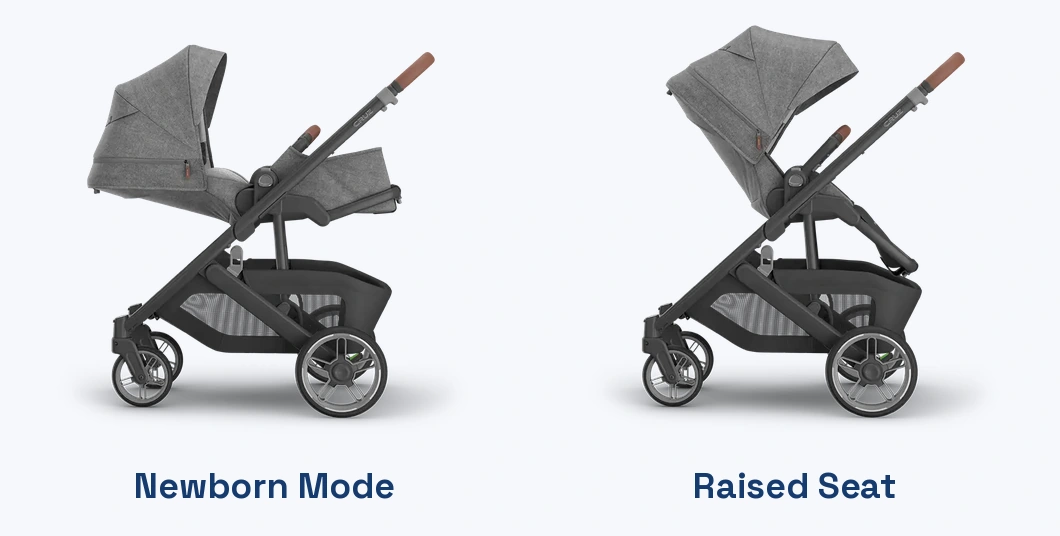
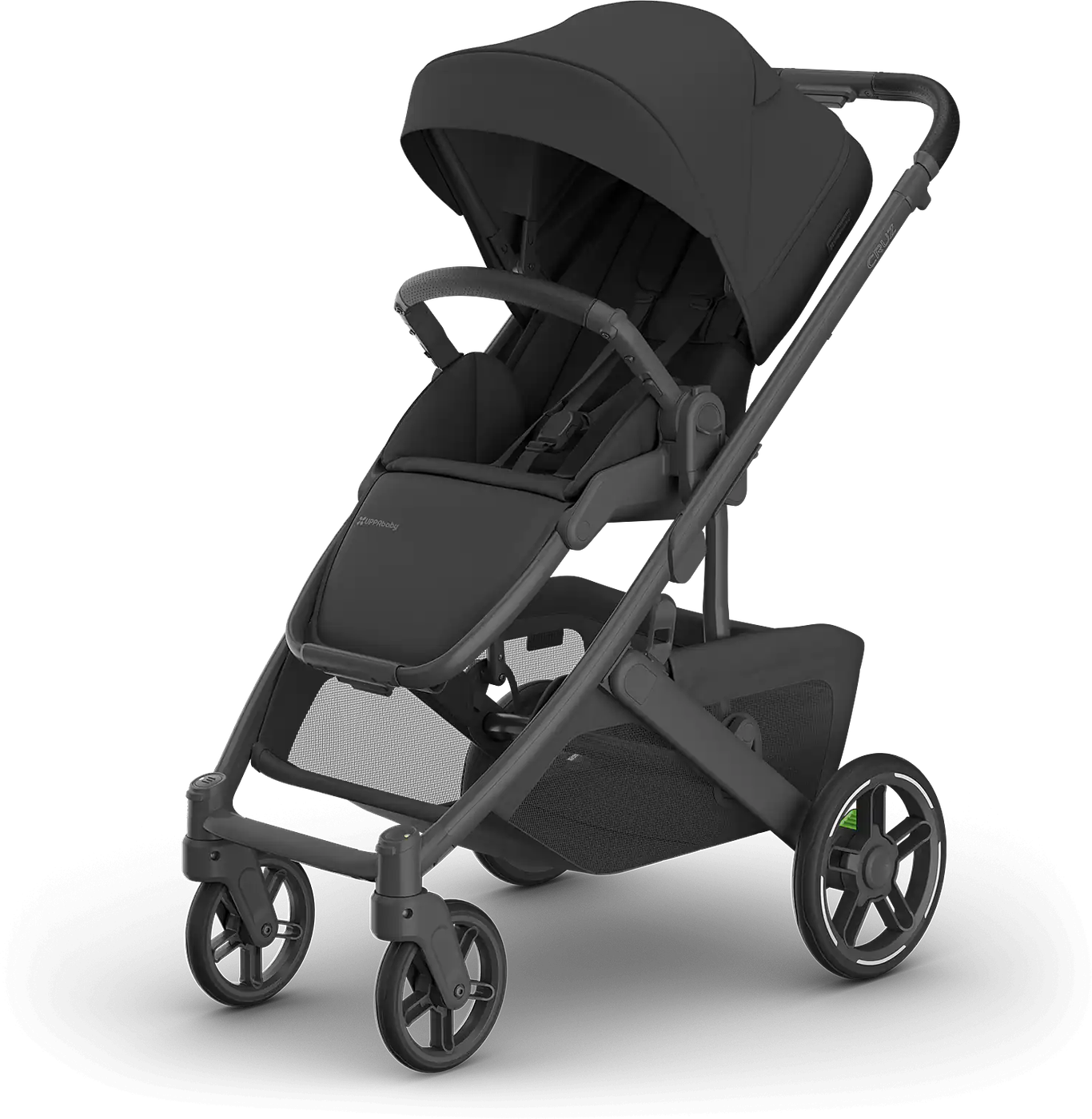
UPPAbaby Cruz V3
The seat shown upright here also converts to newborn mode. Its upper limits are 50 lb and 40 inches.
When Can You Raise the Backrest?
A four-month-old might hold their head steady while you hold them upright and still tip forward when seated. In your arms they have help supporting their body. The CDC lists holding the head steady in that position among its four-month milestones. Sitting without support appears on its nine-month list. If the stroller calls for independent sitting, wait until your baby can sit up without you holding them.
For the first seated walk, set the backrest at an angle the maker allows for your baby and buckle the harness snugly. Stay with your baby. If they slump sideways or their chin drops onto their chest, stop and take them out. A head tipped forward can make breathing harder. Return to an approved infant setup that still fits. If your baby was born early or you’re unsure about their head or trunk control, ask their pediatrician which position is suitable.
If your baby falls asleep in the stroller seat or a docked car seat, move them to their crib or another firm, flat sleep surface as soon as possible. Lay them on their back as the American Academy of Pediatrics advises in its safe sleep guidance.
What If Your Baby Outgrows the Bassinet First?
A bassinet can be outgrown even when there’s still room inside. Take the bassinet supplied with the UPPAbaby Vista V2. Its bassinet instructions say to stop at 20 pounds or when your baby begins to push up on hands and knees, whichever comes first.
If the bassinet is outgrown and the stroller seat is still too upright, a compatible infant car seat your baby still fits can cover the gap. If you have no approved option, pause walks with that stroller. Give the maker the model from the frame label and your baby’s age and size so they can identify a suitable configuration.
What About an Umbrella Stroller?
An umbrella stroller folds into a long, narrow shape. If its seat requires your baby to sit without help, wait for that skill even if the seat reclines. A car seat won’t fit every compact frame, either. The Chicco Liteway has a reclining seat. Its US manual rules out attaching any infant car seat. If your baby still rides in an infant car seat on walks, take the stroller that accepts it.
When you’re ready for a smaller fold, you can browse compact and umbrella strollers.