
Uppababy Cruz vs Uppababy Cruz V3 — Which Is Better?
Side by side |
Uppababy
Uppababy Cruz
75
SCORE
|
Uppababy
Uppababy Cruz V3
—
UNSCORED
|
|---|---|---|
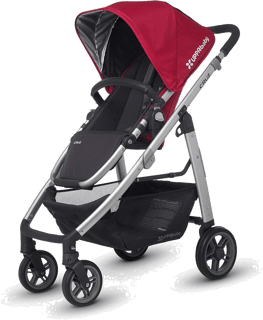 | 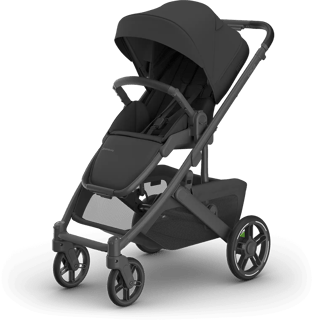 | |
| Scores | ||
| Safety | 898990 | 908990 |
| Portability | 39 | — |
| Versatility | 75 | 75 |
| Comfort | 92 | 92 |
| Everyday Use | 100 | 100 |
| General | ||
Read the General ComparisonOverviewBoth Cruz generations are single-seat strollers with a reversible seat unit, a full-recline backrest, bassinet compatibility and an infant car seat option sold separately. Both support Maxi-Cosi and Cybex adapters, and neither records a Britax adapter option, so seating capacity, comfort basics and infant-car-seat support match, and the real decision sits in handling, fold and wheels. Parents who plan around trunk space and carrying the folded stroller have recorded reasons to lean toward the V3: it records a folded size of 32.5 inches high by 22.5 wide by 17 long with the seat attached, its manual illustrates a carry grip on the folded frame, and its seat reclines one-handed through a rear lever. The Cruz still records a 9.75 kg frame with a telescopic handlebar, but no one-hand fold and no carry strap, so its case rests on the shared basics rather than travel refinements. | ||
| Stroller Status | Discontinued | In Production |
| Country Origin | USA | China |
| Stroller Type |  Travel System | Full-size |
| Frame | ||
Read the Frame ComparisonSize & HandlingUnfolded, the Cruz measures 102.9 x 56.5 x 94 cm and weighs 9.75 kg. Its handlebar is telescopic, adjusting between 102.9 and 109.2 cm to suit different pusher heights. The Cruz V3 measures 41.8 inches high by 22.5 wide by 37.5 long unfolded and weighs 26.5 lb in its recorded configuration with the toddler seat attached; its handle height adjusts with one hand. Both strollers include a shopping basket, so everyday storage runs and errands are covered either way. The recorded units differ, so treat each figure in its own configuration rather than as a converted comparison. | ||
| Stroller Weight | 9.75 kg2.9537 | 12.02 kg2.9537 |
| Frame Material | Aluminum | Aluminum |
| Unfolded Dimensions | 102.9 x 56.5 x 94 cm | 41.8 in H x 22.5 in W x 37.5 in L |
| Rocking Frame | No | Unknown |
| Maximum Weight Capacity | 22.5 kg9.9899.79 | 22.68 kg9.9899.79 |
| Handle Height Adjustment | Telescopic | Yes |
| Handle Material | Leather | Leather |
| Handlebar Height | 102.9-109.2 cm | — |
| Shopping Basket | Yes | Yes |
| Seat | ||
Read the Seat ComparisonSeating & CapacityBoth strollers seat one child and neither converts to a double, so families planning a second close-in-age child would need a different model line. The seat unit reverses on both, letting the child face the parent or the street, and both accept a bassinet. On the V3 the bassinet attaches directly without adapters, though compatibility does not mean a bassinet is included in the stroller package. Capacity and age ranges differ in how they are expressed. The Cruz records a 22.5 kg maximum weight capacity and a recommended age of 0 to 36 months. The Cruz V3 records a 50 lb maximum child weight with a 40-inch height condition and no upper age, with use from birth described through the lay-flat seat, integrated foot barrier and included infant insert. Comfort & CareCoverage overhead is a matching strength: both seats have a canopy recorded as waterproof, plus a peek-a-boo window, and neither records integrated seat ventilation. The V3 canopy is extendable with zip-out fabric and mesh panels on its US configuration, giving a bit more shade flexibility where recorded. For naps on the go, both backrests recline through multiple positions to a full flat layout, but the mechanisms differ: the Cruz uses a handle-operated backrest, while the V3 reclines with one hand via a rear-located lever. Both seats include a footrest with a position-adjustable legrest, and the V3 legrest offers four positions. Cleanup is equally simple on both: seat fabrics are removable and machine washable. The V3 manual specifies a cold, gentle cycle with mild detergent, with the same instruction covering the infant insert, while the basket and canopy fabrics are spot cleaned separately. Harness & RestraintsBoth strollers secure the child with a padded 5-point harness that adjusts in height as the child grows, so restraints match across the two generations. The V3 adds a magnetic buckle on the main seat in its recorded configuration. Both seats also carry a bumper bar; on the V3 it tucks in with the fold rather than needing removal. | ||
| Seats Number | 1 | 1 |
| Double Type | – | – |
| Recommended Age | 0-36 months | 0 months + |
| Converts Double | No | No |
| Reversible Unit | Yes | Yes |
| Bassinet | Yes | Yes |
| Safety Harness | 5-point | 5-point |
| Safety Harness Padding | Yes | Yes |
| Height Adjustable Harness | Yes | Yes |
| Ventilation Integrated | No | No |
| Canopy | Yes | Yes |
| Waterproof Canopy | Yes | Yes |
| Peek A Boo Window | Yes | Yes |
| Bumper Bar | Yes | Yes |
| Reclining Backrest | Yes | Yes |
| Full Reclining Backrest | Yes | Yes |
| Backrest Type | Handle-operated | Rear lever |
| Footrest | Yes | Yes |
| Legrest Position | Yes | Yes |
| Fabrics Removable | Yes | Yes |
| Fabrics Cleaning | Machine washable | Machine washable |
| Folding and Traveling | ||
Read the Folding and Traveling ComparisonFolding & TravelThe fold design is shared: both use a flat, compact fold, both fold with the forward-facing seat attached, both auto-lock when folded, and neither is recorded as airplane carry-on sized. The V3's folded footprint is recorded as 32.5 inches high by 22.5 wide by 17 long with the seat attached, which gives a concrete trunk-planning number the Cruz does not record. Handling the folded stroller differs. The Cruz records no one-hand fold and no carry strap. The V3's manual illustrates a carry grip point on the folded frame for one-hand carrying, though this is a frame grip rather than a shoulder strap. No one-hand fold is recorded for the V3 either, so the grip helps with carrying, not with the folding action itself. | ||
| Folding System |  Compact flat fold | Compact flat fold |
| Folds Forward Facing Seat | Yes | Yes |
| Auto Locking Fold | Yes | Yes |
| Carry Strap | No | Yes |
| One Hand Fold | No | Unknown |
| Airplane Carry On | No | No |
| Folded Dimensions | — | 203.71 L10.681,482 |
| Car-Seat | ||
Read the Car-Seat ComparisonInfant Car SeatsBoth generations work as an infant-car-seat carrier, with the car seat sold separately in each case and adapters for Maxi-Cosi and Cybex infant seats supported; neither records Britax adapter support. On the V3, Mesa and Aria infant car seats attach directly without adapters, which saves a step and an accessory purchase for parents already in the Uppababy car-seat family. Adapter compatibility on either model is a recorded capability, not an included accessory. | ||
| Car Seat Compatible | Yes | Yes |
| Car Seat Sold Separately | Yes | Yes |
| Maxi Cybex Adaptors | Yes | Yes |
| Britax Car Seat Adapters | No | No |
| Wheels | ||
Read the Wheels ComparisonWheels & TerrainThe wheel builds mark the real generational change. The Cruz uses rubber-coated wheels front and rear, at 16.25 cm front and 21.6 cm rear. The V3 moves to polyurethane tires, sized 17.78 cm front and 25.4 cm rear. Both strollers ride on all-wheel suspension with lockable front wheels and removable wheels for cleaning or replacement, and neither is recorded as an all-terrain stroller, so both are best understood as pavement-and-path daily drivers. Braking differs in form but not in function: both are foot-operated. The Cruz uses a rocking pedal, while the V3 uses separate red and green foot pedals shown in its manual, one to set and one to release the brake. | ||
| Number Wheels | 4 | 4 |
| Front Wheels Type | Rubber-coated wheels | Polyurethane tires |
| Rear Wheels Type | Rubber-coated wheels | Polyurethane tires |
| Front Diameter | 16.25 cm | 17.78 cm |
| Rear Diameter | 21.6 cm | 25.4 cm |
| All Terrain Stroller | No | No |
| Brake System | Rocking Pedal | Foot brake |
| Lockable Wheels | Yes | Yes |
| Removable Wheels | Yes | Yes |
| Suspension Wheels | All | All |
Read the Verdict
Verdict
For a parent choosing between these two exact Cruz configurations, the V3 is the stronger pick for travel and daily convenience: it records a concrete folded size with the seat attached, a carry grip point on the folded frame, a one-hand recline lever and a magnetic harness buckle. The Cruz still covers the same core needs, with a reversible full-recline seat, the same car-seat adapter support, a telescopic handlebar and its recorded 9.75 kg frame, so a Cruz already in hand still serves everyday use; it simply lacks the recorded travel and one-hand comfort refinements of the newer generation. Neither is an all-terrain or carry-on stroller, so neither is the right pick for trail use or air-cabin storage.