
Uppababy Cruz vs Uppababy Cruz V2 — Which Is Better?
Side by side |
Uppababy
Uppababy Cruz
75
WINNER
|
Uppababy
Uppababy Cruz V2
74
SCORE
|
|---|---|---|
 | ||
| Scores | ||
| Safety | 89 | 89 |
| Portability | 393339 | 333339 |
| Versatility | 75 | 75 |
| Comfort | 92 | 92 |
| Everyday Use | 100 | 100 |
| General | ||
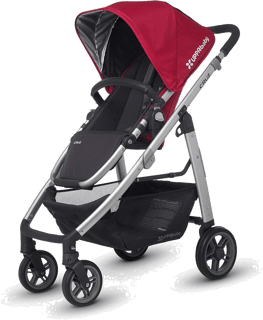
Read the General ComparisonOverviewThe Uppababy Cruz and Cruz V2 are two generations of the same single-child travel system, and most of what parents buy a Cruz for carries across both: a reversible seat, an available bassinet, a flat compact fold with an auto-locking frame, and the same 22.5 kg maximum weight capacity. The meaningful differences are physical. The original Cruz weighs 9.75 kg against the V2's 11.5 kg, so the older frame is the one to pick up if lifting into a car trunk is a daily event. The V2 answers back on the ground, with larger rear wheels and a different brake pedal design. | ||
| Stroller Status | Discontinued | Discontinued |
| Country Origin | USA | USA |
| Stroller Type |  Travel System | Travel System |
| Frame | ||
Read the Frame ComparisonSize & HandlingWeight is the clearest handling difference between the two generations. The Cruz carries 9.75 kg; the Cruz V2 carries 11.5 kg, so anyone who regularly hoists the stroller into a car or up steps will feel it on the older, lighter frame. Both use telescopic handlebars: the Cruz adjusts across 102.9 to 109.2 cm and the V2 across 101.6 to 109.2 cm, an effectively identical range for tall or short pushers. Unfolded, the frames are close as well, 102.9 x 56.5 x 94 cm for the Cruz and 101.6 x 57 x 78.5 cm for the V2. Each includes a shopping basket, so neither generation gives up everyday cargo space. | ||
| Stroller Weight | 9.75 kg2.9537 | 11.5 kg2.9537 |
| Frame Material | Aluminum | Aluminum |
| Unfolded Dimensions | 102.9 x 56.5 x 94 cm | 101.6 x 57 x 78.5 cm |
| Rocking Frame | No | No |
| Maximum Weight Capacity | 22.5 kg9.9899.79 | 22.5 kg9.9899.79 |
| Handle Height Adjustment | Telescopic | Telescopic |
| Handle Material | Leather | Leather |
| Handlebar Height | 102.9-109.2 cm | 101.6 - 109.2 cm |
| Shopping Basket | Yes | Yes |
| Seat | ||
Read the Seat ComparisonSeating & CapacityBoth generations are single-seat strollers with the same 22.5 kg maximum weight capacity, and neither converts to a double, so neither is the frame to choose for a growing pair of children. Each has a reversible seat unit and a bassinet available, giving both a parent-facing or world-facing setup and a flat newborn option. The age guidance differs between the two, and the exact wording matters. The Cruz is listed for 0 to 36 months, while the Cruz V2's toddler seat is listed for 3 months and up, with use from birth requiring the bassinet or an infant snug-seat accessory. Check the seat and accessories actually included with any unit before assuming either age range applies to your configuration. Comfort & CareThe two seats are essentially the same package for comfort. Both have a reclining backrest that reaches a full recline and works through a handle-operated mechanism, plus an adjustable footrest and a legrest that can be repositioned as a child grows. Neither seat has integrated ventilation, so neither generation offers a built-in airflow panel. Weather and cleanup are covered the same way on both. Each seat has a waterproof canopy with a peek-a-boo window, and both use removable, machine washable fabrics, which keeps daily spills and messes manageable on either generation. Harness & RestraintsRestraints are identical across the two generations. Both seats use a padded 5-point harness with height adjustment, so the straps can be repositioned as a child grows and stay the same whether you are looking at the Cruz or the Cruz V2. Both seats also include a bumper bar, giving the child something to hold and adding a front barrier to the seat. | ||
| Seats Number | 1 | 1 |
| Double Type | – | – |
| Recommended Age | 0-36 months | 3 months + |
| Converts Double | No | No |
| Reversible Unit | Yes | Yes |
| Bassinet | Yes | Yes |
| Safety Harness | 5-point | 5-point |
| Safety Harness Padding | Yes | Yes |
| Height Adjustable Harness | Yes | Yes |
| Ventilation Integrated | No | No |
| Canopy | Yes | Yes |
| Waterproof Canopy | Yes | Yes |
| Peek A Boo Window | Yes | Yes |
| Bumper Bar | Yes | Yes |
| Reclining Backrest | Yes | Yes |
| Full Reclining Backrest | Yes | Yes |
| Backrest Type | Handle-operated | Handle-operated |
| Footrest | Yes | Yes |
| Legrest Position | Yes | Yes |
| Fabrics Removable | Yes | Yes |
| Fabrics Cleaning | Machine washable | Machine washable |
| Folding and Traveling | ||
Read the Folding and Traveling ComparisonFolding & TravelFolding is a shared story, and there is no upgrade here between generations. Both use a flat, compact fold that works with the seat attached facing forward, and both frames auto-lock when folded. Neither offers a one-hand fold, so plan on two hands to collapse either generation; the handle-operated recline is a separate mechanism, not a fold control. Neither model is an airplane carry-on, and neither includes a carry strap, so travel means a trunk or a gate check rather than an overhead bin on both. | ||
| Folding System |  Compact flat fold | Compact flat fold |
| Folds Forward Facing Seat | Yes | Yes |
| Auto Locking Fold | Yes | Yes |
| Carry Strap | No | No |
| One Hand Fold | No | No |
| Airplane Carry On | No | No |
| Car-Seat | ||
Read the Car-Seat ComparisonInfant Car SeatsBoth generations are travel systems with the same infant car seat arrangement. Each frame is car seat compatible, with the car seat itself sold separately rather than bundled. Both include Maxi-Cosi and Cybex adapters and no Britax adapters, so the same adapter families apply to either generation. For a family already holding a Maxi-Cosi or Cybex infant seat, either can take it with the right adapters; a Britax household will need a different plan on both. | ||
| Car Seat Compatible | Yes | Yes |
| Car Seat Sold Separately | Yes | Yes |
| Maxi Cybex Adaptors | Yes | Yes |
| Britax Car Seat Adapters | No | No |
| Wheels | ||
Read the Wheels ComparisonWheels & TerrainThe wheels are where the V2 generation spent its changes. Both models use rubber-coated front and rear wheels of the same 16.25 cm front diameter, but the V2's rear wheels are 25.4 cm against the Cruz's 21.6 cm, which puts more wheel under the child on rougher pavement. Both have suspension on all wheels and neither is an all-terrain stroller, so these are city and park frames rather than trail machines. Both offer lockable front wheels and removable wheels for storage or cleaning. The brake is the other difference. The Cruz uses a rocking pedal, which engages and releases with a toe motion on the same pedal, while the Cruz V2 uses a push-down, lift-up pedal. Both are foot-operated; which feels better is a matter of habit rather than a clear upgrade. | ||
| Number Wheels | 4 | 4 |
| Front Wheels Type | Rubber-coated wheels | Rubber-coated wheels |
| Rear Wheels Type | Rubber-coated wheels | Rubber-coated wheels |
| Front Diameter | 16.25 cm | 16.25 cm |
| Rear Diameter | 21.6 cm | 25.4 cm |
| All Terrain Stroller | No | No |
| Brake System | Rocking Pedal | Push Down - Lift Up Pedal |
| Lockable Wheels | Yes | Yes |
| Removable Wheels | Yes | Yes |
| Suspension Wheels | All | All |
Read the Verdict
Verdict
If you are choosing between the two, let lifting and rolling decide. The original Cruz, at 9.75 kg versus 11.5 kg, is the frame for anyone who carries the stroller up stairs or into a car often. The Cruz V2 is the better pick if most travel is on foot, since its larger rear wheels trade that extra weight for more wheel on uneven sidewalks. Everything else that shapes daily use, from the fold and harness to the bassinet and car seat adapters, is effectively the same across both generations.