
Doona vs Uppababy Cruz V3 — Which Is Better?
Side by side |
Doona
Doona
—
UNSCORED
|
Uppababy
Uppababy Cruz V3
—
UNSCORED
|
|---|---|---|
 |  | |
| Scores | ||
| Safety | 767690 | 907690 |
| Portability | 57 | — |
| Versatility | 454575 | 754575 |
| Comfort | — | 92 |
| Everyday Use | 4444100 | 10044100 |
| General | ||
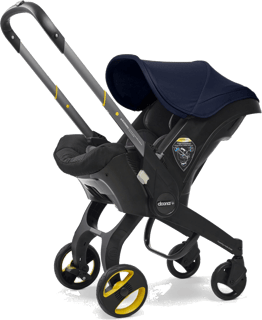
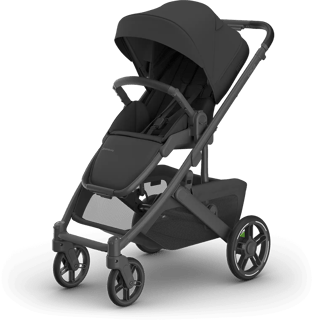
Read the General ComparisonOverviewThe Doona and the Uppababy Cruz V3 serve very different buyers. The Doona is a travel system in which the infant seat and stroller are a single 7 kg unit, rated for the first year at up to 13 kg, with no separate stroller seat, adapters or frame to move between car and stroller. The Cruz V3 is a full-size stroller for a longer stretch: its single seat is rated from birth onward to a 50 lb capacity, it reclines fully, the seat reverses, and it includes a large storage basket. Both work with an infant car seat, but differently: the Doona's car seat is part of the stroller rather than a separate purchase, while the Cruz V3 takes compatible carriers as add-ons, with Mesa and Aria attaching directly without adapters. Neither model is an all-terrain stroller, and neither is an airplane carry-on when folded. If you want one compact unit for the car-and-stroller first year, the Doona fits; if you want a stroller that keeps working as your child grows, the Cruz V3 is the stronger fit. | ||
| Stroller Status | In Production | In Production |
| Country Origin | Israel | China |
| Stroller Type |  Travel System | Full-size |
| Frame | ||
Read the Frame ComparisonSize & HandlingThe Doona is a genuinely small package at 7 kg, unfolding to 101.5 x 44 x 82 cm. Its handlebar is fixed at 97 cm with no height adjustment, and it has no shopping basket, so there is nowhere to stash a diaper bag on the frame. The Cruz V3 is a much larger full-size frame at 26.5 lb, measuring 41.8 in H x 22.5 in W x 37.5 in L unfolded, but its handlebar adjusts for height with one hand, and it includes a large, easy-access storage basket. Tall or shorter caregivers will appreciate the Cruz V3's adjustable handle; the Doona asks everyone to push at the same fixed height. | ||
| Stroller Weight | 7.0 kg2.9537 | 12.02 kg2.9537 |
| Frame Material | Aluminum | Aluminum |
| Unfolded Dimensions | 101.5 x 44 x 82 cm | 41.8 in H x 22.5 in W x 37.5 in L |
| Rocking Frame | No | Unknown |
| Maximum Weight Capacity | 13.0 kg9.9899.79 | 22.68 kg9.9899.79 |
| Handle Height Adjustment | No | Yes |
| Handle Material | Plastic | Leather |
| Handlebar Height | 97 cm | — |
| Shopping Basket | No | Yes |
| Seat | ||
Read the Seat ComparisonSeating & CapacityBoth strollers carry one child, and neither converts to a double, so neither works for twins or a second child riding along. The seat philosophies diverge sharply. The Doona is rated for 0-12 months with a 13 kg maximum capacity, so it is an infant-stage product you will replace within the first year or so. The Cruz V3's seat is rated from 0 months onward with a 50 lb frame capacity, a much longer usable window. Its seat also reverses between parent-facing and forward-facing, which the Doona's fixed seat does not. Both support a bassinet: the Doona lists a bassinet mode, and the Cruz V3 accepts one that attaches directly without adapters, though that compatibility does not mean the bassinet is included in the package. Comfort & CareRecline and leg support are where the Cruz V3 pulls ahead for longer outings. Its backrest reclines through multiple positions with a one-handed, rear-located lever mechanism and goes fully flat, and the footrest adjusts through four leg-rest positions. The Doona's backrest does not recline at all; it has a footrest, but the leg rest does not adjust, so naps on the go are far less supported. Weather and airflow: both seats have canopies, but the Cruz V3's is recorded as waterproof with a peek-a-boo window, while the Doona's canopy is not waterproof and has no viewing window. Neither seat has integrated ventilation. Cleaning is comparable: both have removable, machine washable seat fabrics, with the Cruz V3's instructions specifying a cold, gentle cycle for the seat and infant insert and spot cleaning for the basket and canopy fabrics. Harness & RestraintsThe two seats match closely here. Both use a 5-point harness with padding, and both harnesses adjust for height as your child grows. The one difference is the bumper bar: the Cruz V3's main seat has one that tucks in with the fold, while the Doona has no bumper bar. | ||
| Seats Number | 1 | 1 |
| Double Type | – | – |
| Recommended Age | 0-12 months | 0 months + |
| Converts Double | No | No |
| Reversible Unit | No | Yes |
| Bassinet | Yes | Yes |
| Safety Harness | 5-point | 5-point |
| Safety Harness Padding | Yes | Yes |
| Height Adjustable Harness | Yes | Yes |
| Ventilation Integrated | No | No |
| Canopy | Yes | Yes |
| Waterproof Canopy | No | Yes |
| Peek A Boo Window | No | Yes |
| Bumper Bar | No | Yes |
| Reclining Backrest | No | Yes |
| Full Reclining Backrest | Unknown | Yes |
| Backrest Type | – | Rear lever |
| Footrest | Yes | Yes |
| Legrest Position | No | Yes |
| Fabrics Removable | Yes | Yes |
| Fabrics Cleaning | Machine washable | Machine washable |
| Folding and Traveling | ||
Read the Folding and Traveling ComparisonFolding & TravelBoth use a flat, compact fold that auto-locks, and neither is an airplane carry-on when folded. The Doona has no one-hand fold option, though it does have a carry strap for moving it around. The Cruz V3 folds with the seat attached and forward-facing, and the folded package measures 32.5 in H x 22.5 in W x 17 in L in that with-seat configuration. Its manual shows a carry grip point on the upper frame for lifting the folded stroller. For car trunks and everyday load-in, the Cruz V3's fold is a full-size package, while the Doona is the easier lift at 7 kg. | ||
| Folding System |  Compact flat fold | Compact flat fold |
| Folds Forward Facing Seat | Unknown | Yes |
| Auto Locking Fold | Yes | Yes |
| Carry Strap | Yes | Yes |
| One Hand Fold | No | Unknown |
| Airplane Carry On | No | No |
| Folded Dimensions | — | 203.71 L10.681,482 |
| Car-Seat | ||
Read the Car-Seat ComparisonInfant Car SeatsBoth work with infant car seats, but the relationship to the car seat is the core difference. The Doona's car seat is not sold separately, so the unit you push is the unit you install in the car, and it has no Maxi-Cosi/Cybex or Britax adapter arrangement. The Cruz V3 is car seat compatible with the car seat as a separate purchase: Mesa and Aria infant car seats attach directly without adapters, and on the EU-market product, adapters for Maxi-Cosi, Cybex and BeSafe carriers are sold separately. Neither has Britax adapter support. | ||
| Car Seat Compatible | Yes | Yes |
| Car Seat Sold Separately | No | Yes |
| Maxi Cybex Adaptors | No | Yes |
| Britax Car Seat Adapters | No | No |
| Wheels | ||
Read the Wheels ComparisonWheels & TerrainNeither model is an all-terrain stroller, so both are aimed at pavement rather than off-road use. The Doona rolls on EVA foam-coated wheels with a 12.7 cm front diameter, a push-down, lift-up pedal brake, no lockable wheels and no removable wheels. The Cruz V3 carries more equipment for uneven ground: polyurethane tires sized 17.78 cm front and 25.4 cm rear, all-wheel suspension, a lockable front-wheel option, a foot brake and wheels that can be removed from both axles. For routes with curbs or rougher pavement, the Cruz V3's larger wheels and suspension are the better-equipped choice; the Doona's smaller wheels are geared to smooth pavement and short trips between car and destination. | ||
| Number Wheels | 4 | 4 |
| Front Wheels Type | EVA foam-coated wheels | Polyurethane tires |
| Rear Wheels Type | EVA foam-coated wheels | Polyurethane tires |
| Front Diameter | 12.7 cm | 17.78 cm |
| All Terrain Stroller | No | No |
| Brake System | Push Down - Lift Up Pedal | Foot brake |
| Lockable Wheels | No | Yes |
| Removable Wheels | No | Yes |
| Suspension Wheels | Unknown | All |
| Rear Diameter | — | 25.4 cm |
Read the Verdict
Verdict
Pick the Doona if your priority is the infant year: one 7 kg unit that moves between car and stroller with no separate seat, adapters or frame, sized for 0-12 months and a 13 kg capacity. Pick the Cruz V3 if you want one stroller from birth through the toddler years: a reversible, fully reclining seat, a 50 lb capacity, storage, an adjustable handlebar, suspension and larger wheels. The trade-off is size and setup, since the Cruz V3 is a full-size, 26.5 lb stroller that folds with the seat attached and takes its infant car seat as a separate purchase.