
Doona vs Evenflo Pivot — Which Is Better?
Side by side |
Doona
Doona
—
UNSCORED
|
Evenflo
Evenflo Pivot
72
SCORE
|
|---|---|---|
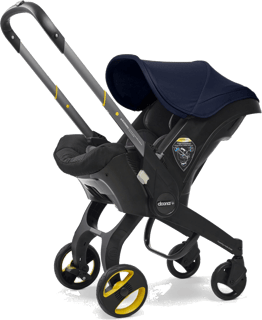 | 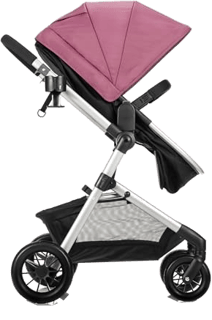 | |
| Scores | ||
| Safety | 767699 | 997699 |
| Portability | 575157 | 515157 |
| Versatility | 454565 | 654565 |
| Comfort | — | 68 |
| Everyday Use | 444478 | 784478 |
| General | ||
Read the General ComparisonOverviewThe Evenflo Pivot and the Doona are both travel systems, but they suit very different parents. The Pivot is built around a stroller that keeps working well past the infant stage, with a reversible seat, a bassinet option, a reclining backrest, a shopping basket, and a recommended age range of 0 to 72 months. The Doona is a lighter, tighter package aimed squarely at the first year, with a 0 to 12 month age range, a 7 kg stroller weight, and a car seat that is part of the system rather than a separate purchase. The main choice comes down to how you travel and how long you want the same gear to last. The Pivot folds with one hand and carries a 50 lb toddler seat limit on EVA foam wheels with lockable fronts and rear suspension, while the Doona folds flat with an auto-locking fold and a carry strap for moving between car and sidewalk. If your priority is a single compact system for an infant in the car-heavy first year, the Doona fits that job; the Pivot is the one that grows with the child. | ||
| Stroller Status | In Production | In Production |
| Country Origin | Israel | USA |
| Stroller Type |  Travel System | Travel System |
| Frame | ||
Read the Frame ComparisonSize & HandlingThe Doona is the lighter of the two at 7 kg, against the Pivot's 9.1 kg. Neither offers handle height adjustment, so the fixed handlebars are what you get: 102 cm on the Pivot and 97 cm on the Doona. Storage is where they diverge, since the Pivot has a shopping basket and the Doona does not, which matters if you run errands with the stroller rather than just moving between car and door. Unfolded, the Pivot measures 26 inches wide by 32 inches deep by 41 inches high, while the Doona measures 101.5 x 44 x 82 cm. Both are single-seat frames, so the size difference mostly affects doorway and trunk room rather than passenger space. | ||
| Stroller Weight | 7.0 kg2.9537 | 9.1 kg2.9537 |
| Frame Material | Aluminum | Steel |
| Unfolded Dimensions | 101.5 x 44 x 82 cm | 26" W x 32" D x 41" H |
| Rocking Frame | No | No |
| Maximum Weight Capacity | 13.0 kg9.9899.79 | 22.68 kg9.9899.79 |
| Handle Height Adjustment | No | No |
| Handle Material | Plastic | Leatherette |
| Handlebar Height | 97 cm | 102 cm |
| Shopping Basket | No | Yes |
| Seat | ||
Read the Seat ComparisonSeating & CapacityBoth are single-seat strollers that do not convert to a double, but the usable lifespan is very different. The Pivot's recommended age range runs 0 to 72 months, and its stroller toddler seat carries up to 50 lb. The Doona covers 0 to 12 months with a maximum weight capacity of 13.0 kg, so it is an infant-period product rather than a long-term one. Both offer a bassinet option. Only the Pivot has a reversible seat unit, so the child can face the parent or the street, while the Doona seat is fixed in one orientation. Comfort & CareFor naps, the Pivot is the clear pick. Its backrest reclines, fully reclines, and adjusts through a multi-position strap adjuster plus a handle at the top of the seat that rotates into three positions. The Doona has no reclining backrest at all, so it stays at one seat angle. Both include a footrest, and neither has a height-positionable legrest or integrated seat ventilation. For weather, the Pivot's canopy is waterproof, while the Doona's is not, so the Doona's canopy is not a substitute for rain protection. Neither has a peek-a-boo window to check on the child from behind. Care is straightforward on both. Each has removable, machine washable seat fabrics; the Pivot fabrics are also wipe-clean or spot-clean for quicker tidy-ups between washes. Harness & RestraintsRestraints are nearly identical. Both use a 5-point harness with padding and a height-adjustable harness so the shoulder straps can move up as the child grows. The one structural difference is the bumper bar: the Pivot has one, the Doona does not. | ||
| Seats Number | 1 | 1 |
| Double Type | – | – |
| Recommended Age | 0-12 months | 0-72 months |
| Converts Double | No | No |
| Reversible Unit | No | Yes |
| Bassinet | Yes | Yes |
| Safety Harness | 5-point | 5-point |
| Safety Harness Padding | Yes | Yes |
| Height Adjustable Harness | Yes | Yes |
| Ventilation Integrated | No | No |
| Canopy | Yes | Yes |
| Waterproof Canopy | No | Yes |
| Peek A Boo Window | No | No |
| Bumper Bar | No | Yes |
| Reclining Backrest | No | Yes |
| Full Reclining Backrest | Unknown | Yes |
| Backrest Type | – | Strap-operated, Handle-operated |
| Footrest | Yes | Yes |
| Legrest Position | No | No |
| Fabrics Removable | Yes | Yes |
| Fabrics Cleaning | Machine washable | Machine washable, Wipe-clean / Spot-clean |
| Folding and Traveling | ||
Read the Folding and Traveling ComparisonFolding & TravelBoth use a flat, compact fold, and neither qualifies as an airplane carry-on. The folding experience differs in the details. The Pivot folds with one hand and folds with the seat forward-facing, but it does not auto-lock when folded and has no carry strap. The Doona auto-locks into its folded shape and has a carry strap, but its fold is not one-handed. | ||
| Folding System |  Compact flat fold | Compact flat fold |
| Folds Forward Facing Seat | Unknown | Yes |
| Auto Locking Fold | Yes | No |
| Carry Strap | Yes | No |
| One Hand Fold | No | No |
| Airplane Carry On | No | No |
| Car-Seat | ||
Read the Car-Seat ComparisonInfant Car SeatsBoth travel systems are car seat compatible. The Pivot's car seat is sold separately, and neither Maxi-Cosi/Cybex nor Britax adapters are listed for it. The Doona's car seat is not sold separately, meaning it comes as part of the system rather than as an add-on purchase, and it also lists no Maxi-Cosi/Cybex or Britax adapters. | ||
| Car Seat Compatible | Yes | Yes |
| Car Seat Sold Separately | No | Yes |
| Maxi Cybex Adaptors | No | No |
| Britax Car Seat Adapters | No | No |
| Wheels | ||
Read the Wheels ComparisonWheels & TerrainBoth roll on EVA foam-coated wheels front and rear with a push-down, lift-up pedal brake, and neither has removable wheels. The Pivot is the more capable chassis: 17.8 cm front wheels, lockable front wheels, rear suspension, and an all-terrain stroller classification. The Doona has smaller 12.7 cm front wheels, no lockable wheels, and is not classed as all-terrain, which fits its intended use on pavement and indoors rather than rough ground. | ||
| Number Wheels | 4 | 4 |
| Front Wheels Type | EVA foam-coated wheels | EVA foam-coated wheels |
| Rear Wheels Type | EVA foam-coated wheels | EVA foam-coated wheels |
| Front Diameter | 12.7 cm | 17.8 cm |
| All Terrain Stroller | No | Yes |
| Brake System | Push Down - Lift Up Pedal | Push Down - Lift Up Pedal |
| Lockable Wheels | No | Yes |
| Removable Wheels | No | No |
| Suspension Wheels | Unknown | Rear |
Read the Verdict
Verdict
Choose the Doona if you want one light, compact system for a baby's first year centered on car travel: at 7 kg with an auto-locking flat fold, a carry strap, and an included car seat, it does that job with nothing extra. Choose the Pivot if you want a stroller that keeps working through toddlerhood, with a reversible seat, a full recline, lockable wheels with rear suspension, a shopping basket, and a 50 lb seat capacity. The decision rests on age span, terrain, and how you move between car and street.