
Bugaboo Donkey 2 vs Bugaboo Donkey 6 — Which Is Better?
Side by side |
Bugaboo
Bugaboo Donkey 2
72
SCORE
|
Bugaboo
Bugaboo Donkey 6
—
UNSCORED
|
|---|---|---|
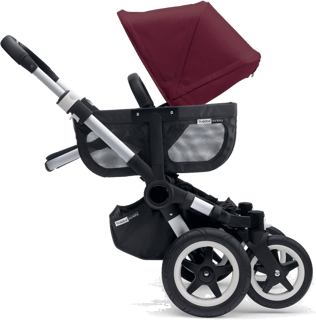 | 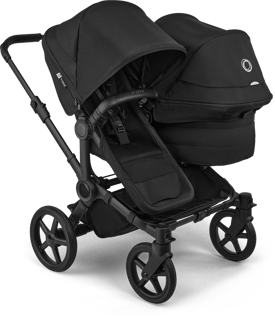 | |
| Scores | ||
| Safety | 959598 | 989598 |
| Portability | 18 | — |
| Versatility | 100 | — |
| Comfort | 75 | — |
| Everyday Use | 8989100 | 10089100 |
| General | ||
Read the General ComparisonOverviewThe Bugaboo Donkey 2 and Donkey 6 are two generations of the same convertible side-by-side double stroller line. Both record side-by-side double seating that converts as your family grows, reversible seats, a bassinet option, a 5-point harness, and infant car seat compatibility, so the core Donkey concept carries across both models. The meaningful choice is how long the stroller lasts and how it folds. The Donkey 6 is recorded from birth to 48 months with a 22 kg seat load per seat, while the Donkey 2 record runs to 36 months with a 17 kg maximum weight capacity. The Donkey 6 also records a one-hand fold and a carry handle, both of which the Donkey 2 record lacks. | ||
| Stroller Status | Discontinued | In Production |
| Country Origin | Netherlands | Unknown |
| Stroller Type |  Travel System | Double/Convertible |
| Frame | ||
Read the Frame ComparisonSize & HandlingThe Donkey 2 records a 13.3 kg stroller weight and unfolded dimensions of 106 x 60-74 x 114 cm. Its telescopic handle adjusts across a recorded 88-106 cm range, so tall and short caregivers can both find a comfortable push position. The Donkey 6 record lists 33.7 lb for the single stroller fully assembled with one seat, with a bassinet configuration separately listed at 35.9 lb, and its handle height is adjustable. Both models include a shopping basket. | ||
| Stroller Weight | 13.3 kg2.9537 | 33.7 lb |
| Frame Material | Aluminum | Aluminum |
| Unfolded Dimensions | 106 x 60-74 x 114 cm | Unknown |
| Rocking Frame | No | Unknown |
| Maximum Weight Capacity | 17.0 kg9.9899.79 | 22.68 kg9.9899.79 |
| Handle Height Adjustment | Telescopic | Yes |
| Handle Material | Leatherette | 100% PU faux leather material |
| Handlebar Height | 88-106 cm | — |
| Shopping Basket | Yes | Yes |
| Seat | ||
Read the Seat ComparisonSeating & CapacityBoth models seat children side by side and convert between single and double configurations. The Donkey 2 record shows two seats with a reversible unit and a bassinet. On the Donkey 6, the standard US single package leaves the sibling seat as a separate purchase, while the recorded double package includes the bassinet in the box and offers single-to-double conversion in three clicks with reversible side-by-side seats. Check which package you are actually buying before counting seats. Age and load ratings favor the newer model. The Donkey 2 is recorded for 0 to 36 months with a 17 kg maximum weight capacity. The Donkey 6 record runs from birth to 48 months with a 22 kg seat load per seat. The two capacity figures use different recorded bases, one a frame maximum and one a per-seat load, so treat each as its own rating rather than a shared scale. Comfort & CareCanopy behavior is where the generations diverge. Both record a canopy and neither is recorded as waterproof, so neither should be counted on as rain protection. The Donkey 6 adds peek-a-boo panels on both canopies for checking a sleeping child; the Donkey 2 records no peek-a-boo window and no integrated seat ventilation. Recline is similar on paper. Both record a reclining backrest that reaches a full recline, operated by a rear-located lever mechanism, plus a footrest. Neither records an adjustable legrest position. On the Donkey 6, the manual shows three parent-facing recline positions and two allowed world-facing positions, with the lowest world-facing position prohibited. Fabrics are removable on both. The Donkey 2 record lists machine washable cleaning, while the Donkey 6 adds wipe-clean and spot-clean options alongside machine washing, which helps for quick messes between washes. Harness & RestraintsRestraints match across generations. Both record a 5-point harness with padding and height-adjustable shoulder straps, plus a bumper bar. The Donkey 6 detail describes a leather-look rotating bumper bar and softened shoulder padding. There is no recorded harness difference that would tip the choice toward either model on its own. | ||
| Seats Number | 2 | Unknown |
| Double Type |  Side by Side | Side by Side |
| Recommended Age | 0-36 months | 0-48 months |
| Converts Double | Yes | Yes |
| Reversible Unit | Yes | Yes |
| Bassinet | Yes | Yes |
| Safety Harness | 5-point | 5-point |
| Safety Harness Padding | Yes | Yes |
| Height Adjustable Harness | Yes | Yes |
| Ventilation Integrated | No | Unknown |
| Canopy | Yes | Yes |
| Waterproof Canopy | No | No |
| Peek A Boo Window | No | Yes |
| Bumper Bar | Yes | Yes |
| Reclining Backrest | Yes | Yes |
| Full Reclining Backrest | Yes | Yes |
| Backrest Type | Rear lever | Rear lever |
| Footrest | Yes | Yes |
| Legrest Position | No | No |
| Fabrics Removable | Yes | Yes |
| Fabrics Cleaning | Machine washable | Machine washable, Wipe-clean / Spot-clean |
| Folding and Traveling | ||
Read the Folding and Traveling ComparisonFolding & TravelBoth use a flat, compact fold and both fold with the forward-facing seat mounted. The Donkey 6 goes further: its recorded fold keeps the seat mounted in either orientation, works one-handed, and leaves a middle-bar carry handle for lifting the folded package. The Donkey 2 records none of these conveniences: no one-hand fold, no auto-locking fold, and no carry strap. Neither model is recorded as airplane carry-on, so plan on gate-checking or car trunk transport for both. | ||
| Folding System |  Compact flat fold | Compact flat fold |
| Folds Forward Facing Seat | Yes | Yes |
| Auto Locking Fold | No | Unknown |
| Carry Strap | No | Yes |
| One Hand Fold | No | Yes |
| Airplane Carry On | No | No |
| Car-Seat | ||
Read the Car-Seat ComparisonInfant Car SeatsBoth generations accept an infant car seat, and in both records the car seat is sold separately rather than bundled. Adapter support covers Maxi-Cosi and Cybex on both, and Britax adapter compatibility is recorded for both. For the US Donkey 6 packages covered, Bugaboo car seat adapters are required and sold separately, so budget for them on either model. | ||
| Car Seat Compatible | Yes | Yes |
| Car Seat Sold Separately | Yes | Yes |
| Maxi Cybex Adaptors | Yes | Yes |
| Britax Car Seat Adapters | Yes | Yes |
| Wheels | ||
Read the Wheels ComparisonWheels & TerrainBoth are recorded as all-terrain strollers with suspension on all wheels and removable front and rear wheels. The Donkey 2 uses foam-filled tires front and rear, sized 25 cm front and 30 cm rear. The Donkey 6 record lists a 10-inch front and 12-inch rear wheel; its tire construction is not recorded, so no fill-type comparison is possible. Brakes and locks differ in detail. The Donkey 2 uses a push-down, lift-up pedal brake with lockable wheels. The Donkey 6 uses a foot-operated rear parking brake, and its lockable wheels are front swivel locks only, a mechanism separate from the parking brake. | ||
| Number Wheels | 4 | 4 |
| Front Wheels Type | Foam-filled tires | — |
| Rear Wheels Type | Foam-filled tires | — |
| Front Diameter | 25.0 cm | 10 in |
| Rear Diameter | 30.0 cm | 12 in |
| All Terrain Stroller | Yes | Yes |
| Brake System | Push Down - Lift Up Pedal | Foot brake |
| Lockable Wheels | Yes | Yes |
| Removable Wheels | Yes | Yes |
| Suspension Wheels | All | All |
Read the Verdict
Verdict
Choose the Donkey 6 if you are picking a new stroller from this line: its recorded age range runs to 48 months versus 36 months for the Donkey 2, it supports a 22 kg seat load per seat, and it folds one-handed with a carry handle plus a peek-a-boo canopy panel. The Donkey 2, the earlier generation in this comparison, remains a lighter 13.3 kg side-by-side option if you already own one or are evaluating a secondhand unit, accepting its 17 kg maximum weight capacity, 0-36 month range, and a fold with no recorded one-hand operation or carry strap.