
Bugaboo Ant vs Doona — Which Is Better?
Side by side |
Bugaboo
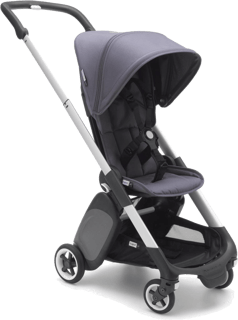
Bugaboo Ant
81
SCORE
|
Doona
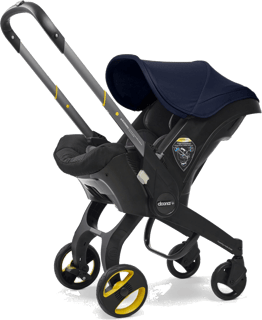
Doona
—
UNSCORED
|
|---|---|---|
 |  | |
| Scores | ||
| Safety | 807680 | 767680 |
| Portability | 965796 | 575796 |
| Versatility | 554555 | 454555 |
| Comfort | 83 | — |
| Everyday Use | 894489 | 444489 |
| General | ||
Read the General ComparisonOverviewThe Doona and the Bugaboo Ant solve different travel problems. The Doona is a travel system built around a single integrated unit that serves as both car seat and stroller, so parents who move between car and pavement constantly in the first year get one device instead of two. The Ant is a compact stroller designed to keep working well past infancy, with a reversible seat, a full recline, and a fold small enough for airplane carry-on. The age split frames the whole decision. The Doona is recommended for 0 to 12 months with a 13 kg weight capacity, while the Ant covers 0 to 24 months and carries up to 22 kg. Storage is another practical divider: the Ant has a shopping basket, the Doona does not. Neither is an all-terrain stroller, so both are best matched to city and travel use rather than rough ground. | ||
| Stroller Status | Discontinued | In Production |
| Country Origin | Netherlands | Israel |
| Stroller Type |  Compact Stroller |  Travel System |
| Frame | ||
Read the Frame ComparisonSize & HandlingBoth strollers occupy a similar footprint when open: the Doona measures 101.5 x 44 x 82 cm and the Ant 102 x 41 x 97 cm, so the Ant is a touch narrower but taller. The Doona is listed at 7 kg and the Ant at 15.8 lbs, each in its recorded unit. Handlebar setup is a real difference for taller or shorter caregivers. The Doona has a fixed handlebar at 97 cm with no height adjustment. The Ant uses a telescopic handlebar that adjusts across a range of 37.4 in to 40.9 in. Storage under the seat also matters day to day: the Ant includes a shopping basket, the Doona has none, which pushes bags onto your shoulder or arm. | ||
| Stroller Weight | 7.17 kg2.9537 | 7.0 kg2.9537 |
| Frame Material | Aluminum | Aluminum |
| Unfolded Dimensions | 102 x 41 x 97 cm | 101.5 x 44 x 82 cm |
| Rocking Frame | No | No |
| Maximum Weight Capacity | 22.0 kg9.9899.79 | 13.0 kg9.9899.79 |
| Handle Height Adjustment | Telescopic | No |
| Handle Material | Recyclable plastic | Plastic |
| Handlebar Height | 37.4 in – 40.9 in | 97 cm |
| Shopping Basket | Yes | No |
| Seat | ||
Read the Seat ComparisonSeating & CapacityBoth are single-seat strollers, and neither converts to a double. The bigger question is how long each one lasts. The Doona seat is recommended for 0 to 12 months and supports up to 13 kg. The Ant is recommended for 0 to 24 months with a maximum weight capacity of 22 kg. Seating direction is the other structural choice. The Ant has a reversible unit, so the seat can face you or face the world. The Doona seat is not reversible. For newborn use, the Doona offers a bassinet configuration, while the Ant does not include a bassinet. Comfort & CareRecline is where the Ant pulls ahead for naps on the go. Its backrest reclines fully, using a rear-located lever-operated mechanism, while the Doona backrest does not recline at all. Both include a footrest, and neither offers adjustable legrest positions. Canopy coverage differs in ways that show up in weather. Both strollers include a canopy, but the Ant's is waterproof with a peekaboo window so you can check on your child from behind. The Doona canopy is not waterproof and has no peekaboo window. Neither seat has integrated ventilation, so neither is positioned for hot-climate airflow as a built-in feature. Cleaning is easy on both. Each has removable fabrics that are machine washable, so spills and diaper incidents do not require hand scrubbing. Harness & RestraintsRestraint systems are essentially identical and solid on both models. Each uses a 5-point safety harness with padding at the contact points and a height-adjustable harness so the straps can be repositioned as your child grows. Neither stroller includes a bumper bar, so the harness is the only in-seat restraint on both. | ||
| Seats Number | 1 | 1 |
| Double Type | – | – |
| Recommended Age | 0-24 months | 0-12 months |
| Converts Double | No | No |
| Reversible Unit | Yes | No |
| Bassinet | No | Yes |
| Safety Harness | 5-point | 5-point |
| Safety Harness Padding | Yes | Yes |
| Height Adjustable Harness | Yes | Yes |
| Ventilation Integrated | No | No |
| Canopy | Yes | Yes |
| Waterproof Canopy | Yes | No |
| Peek A Boo Window | Yes | No |
| Bumper Bar | No | No |
| Reclining Backrest | Yes | No |
| Full Reclining Backrest | Yes | Unknown |
| Backrest Type | Rear lever | – |
| Footrest | Yes | Yes |
| Legrest Position | No | No |
| Fabrics Removable | Yes | Yes |
| Fabrics Cleaning | Machine washable | Machine washable |
| Folding and Traveling | ||
Read the Folding and Traveling ComparisonFolding & TravelBoth use a flat, compact folding system with an auto-locking fold and a carry strap for hands-free transport. The folding experience then diverges sharply. The Ant offers a one-hand fold, is listed for airplane carry-on, and folds to an ultra compact 9 in long by 14.9 in wide by 21.6 in high with the seat attached and wheels on. The Doona does not fold one-handed and is not listed for airplane carry-on. The Ant also folds with the seat facing forward, which keeps the fold sequence simple when you are juggling a child and luggage. For frequent flyers, the Ant's carry-on listing and folded dimensions make it the practical travel pick of the two; the Doona's travel strength is instead the car-to-stroller transition, not the overhead bin. | ||
| Folded Dimensions | 47.47 L10.681,482 | — |
| Folding System |  Compact flat fold | Compact flat fold |
| Folds Forward Facing Seat | Yes | Unknown |
| Auto Locking Fold | Yes | Yes |
| Carry Strap | Yes | Yes |
| One Hand Fold | Yes | No |
| Airplane Carry On | Yes | No |
| Car-Seat | ||
Read the Car-Seat ComparisonInfant Car SeatsThis is the Doona's core reason to exist. It is a travel system whose car seat is part of the product rather than an add-on, and its car seat is not sold separately from the stroller configuration. The Ant takes the opposite approach: it is car seat compatible but the car seat is sold separately, so you buy the seat and the chassis independently. Adapter support also differs. The Ant works with Maxi-Cosi and Cybex car seats via its adapters, but not with Britax. The Doona has no Maxi-Cosi/Cybex or Britax adapters; its car seat is built in rather than docked. | ||
| Car Seat Compatible | Yes | Yes |
| Car Seat Sold Separately | Yes | No |
| Maxi Cybex Adaptors | Yes | No |
| Britax Car Seat Adapters | No | No |
| Wheels | ||
Read the Wheels ComparisonWheels & TerrainNeither model is an all-terrain stroller, and neither offers lockable wheels, so both are aimed at sidewalks, malls, airports, and smooth pavement. Wheel materials differ: the Doona uses EVA foam-coated wheels front and rear, while the Ant uses rubber-coated wheels. The Ant's wheels measure 12.5 cm at the front and 15 cm at the rear; the Doona's front wheels are 12.7 cm. The Ant has suspension on all wheels, and its wheels are removable, which can help with cleaning or packing down. The Doona's wheels are not removable. Both use the same push-down, lift-up pedal brake, so parking the stroller feels familiar on either. | ||
| Number Wheels | 4 | 4 |
| Front Wheels Type | Rubber-coated wheels | EVA foam-coated wheels |
| Rear Wheels Type | Rubber-coated wheels | EVA foam-coated wheels |
| Front Diameter | 12.5 cm | 12.7 cm |
| Rear Diameter | 15.0 cm | — |
| All Terrain Stroller | No | No |
| Brake System | Push Down - Lift Up Pedal | Push Down - Lift Up Pedal |
| Lockable Wheels | No | No |
| Removable Wheels | Yes | No |
| Suspension Wheels | All | Unknown |
Read the Verdict
Verdict
Pick the Doona if your first year revolves around the car: one integrated unit handles the car seat and stroller jobs, and it offers a bassinet configuration. Accept that it is recommended for 0 to 12 months and carries up to 13 kg, with no shopping basket, no recline, and no carry-on fold. Pick the Ant if you want a stroller that lasts to 24 months and 22 kg, with a reversible seat, full recline, waterproof canopy, a one-hand fold listed for airplane carry-on, and suspension on all wheels.